Event highlights




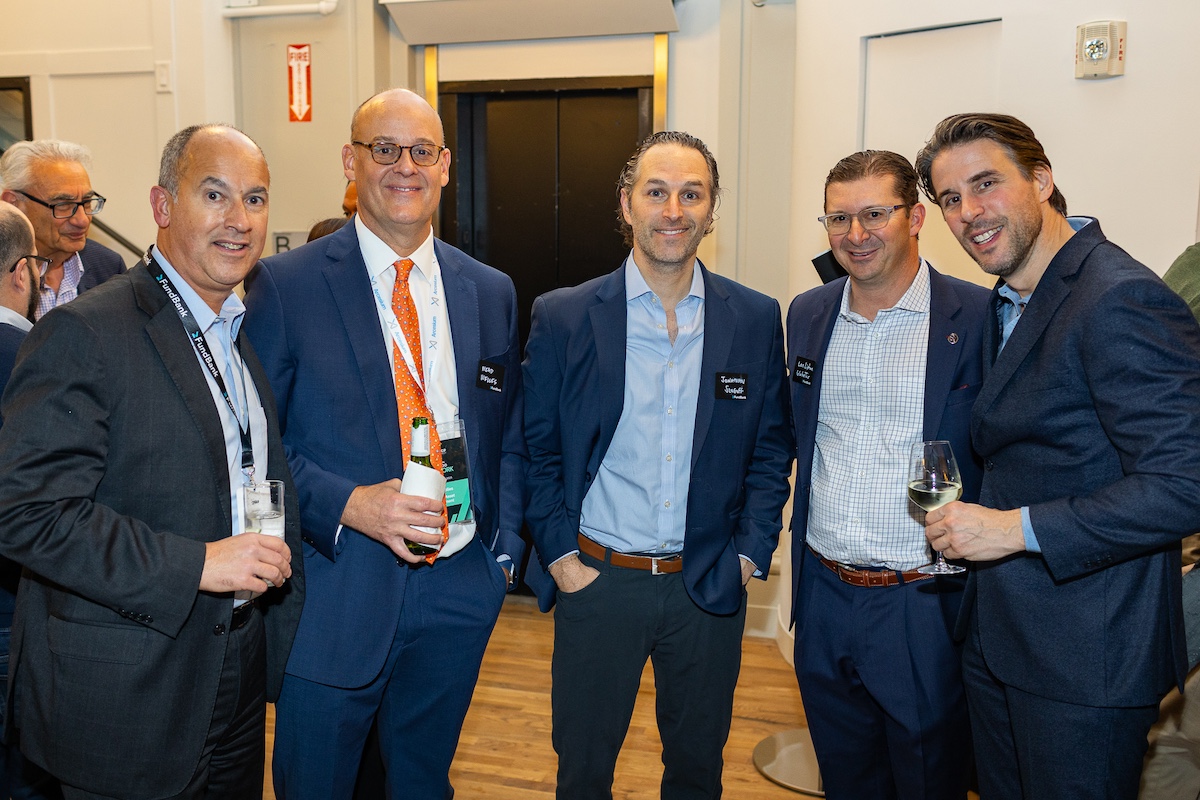
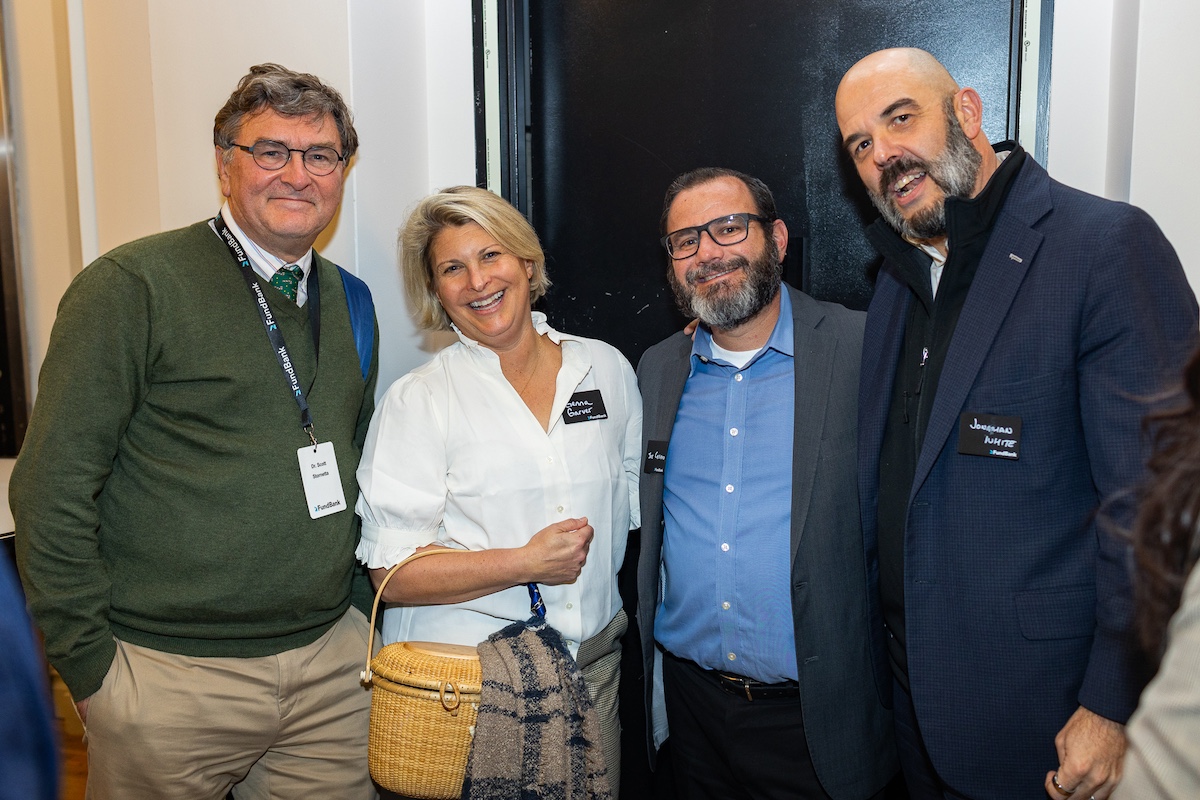
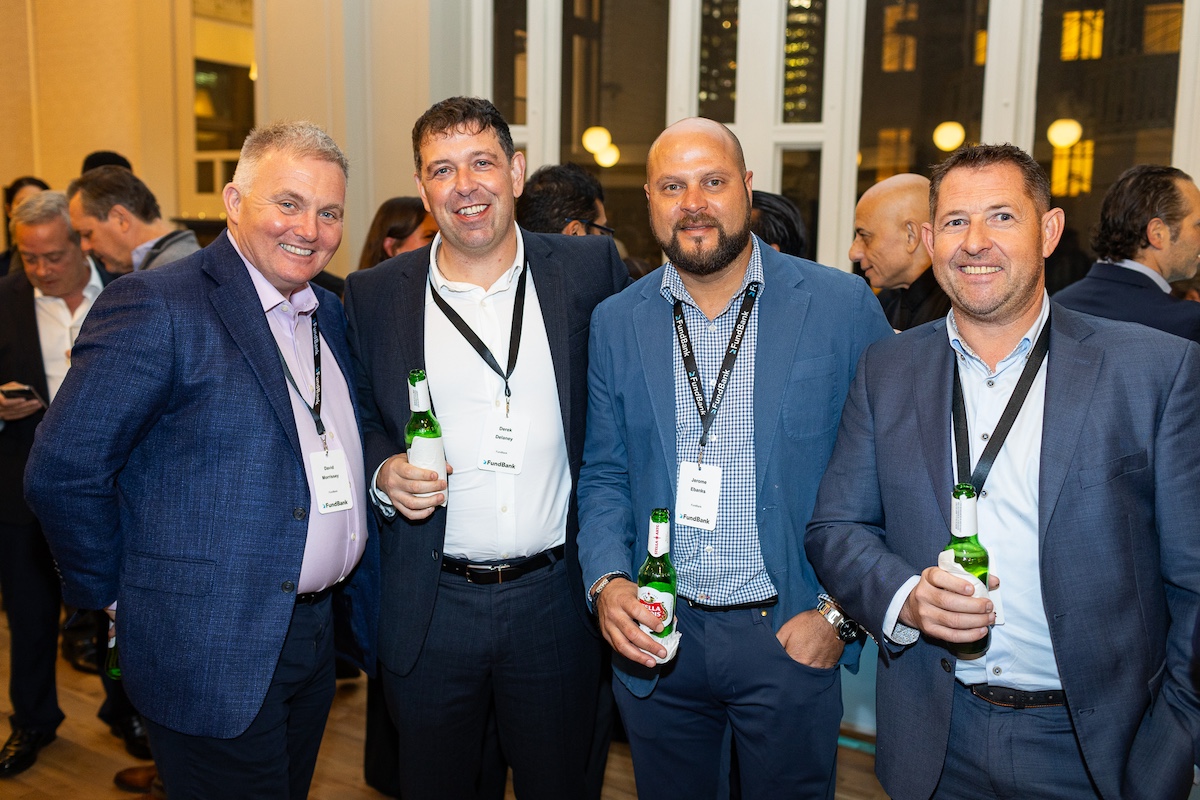
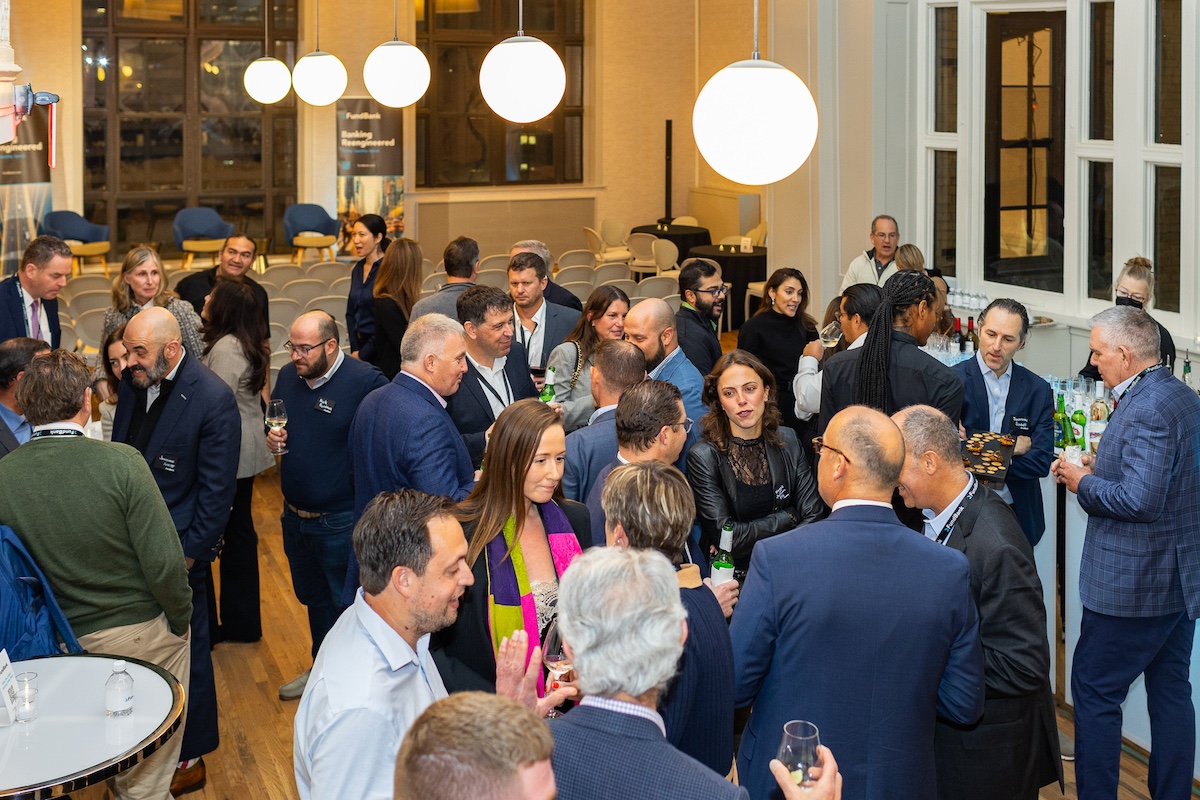
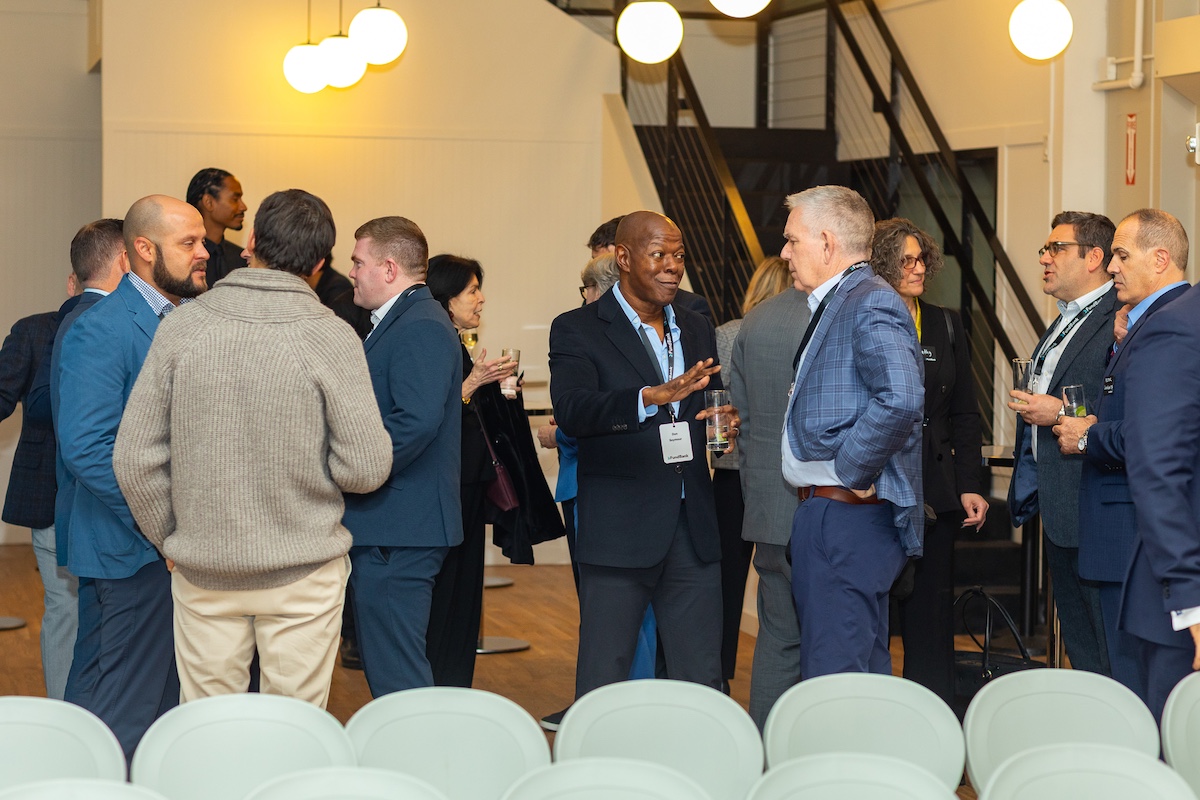
Industry insights from the New York Spotlight event
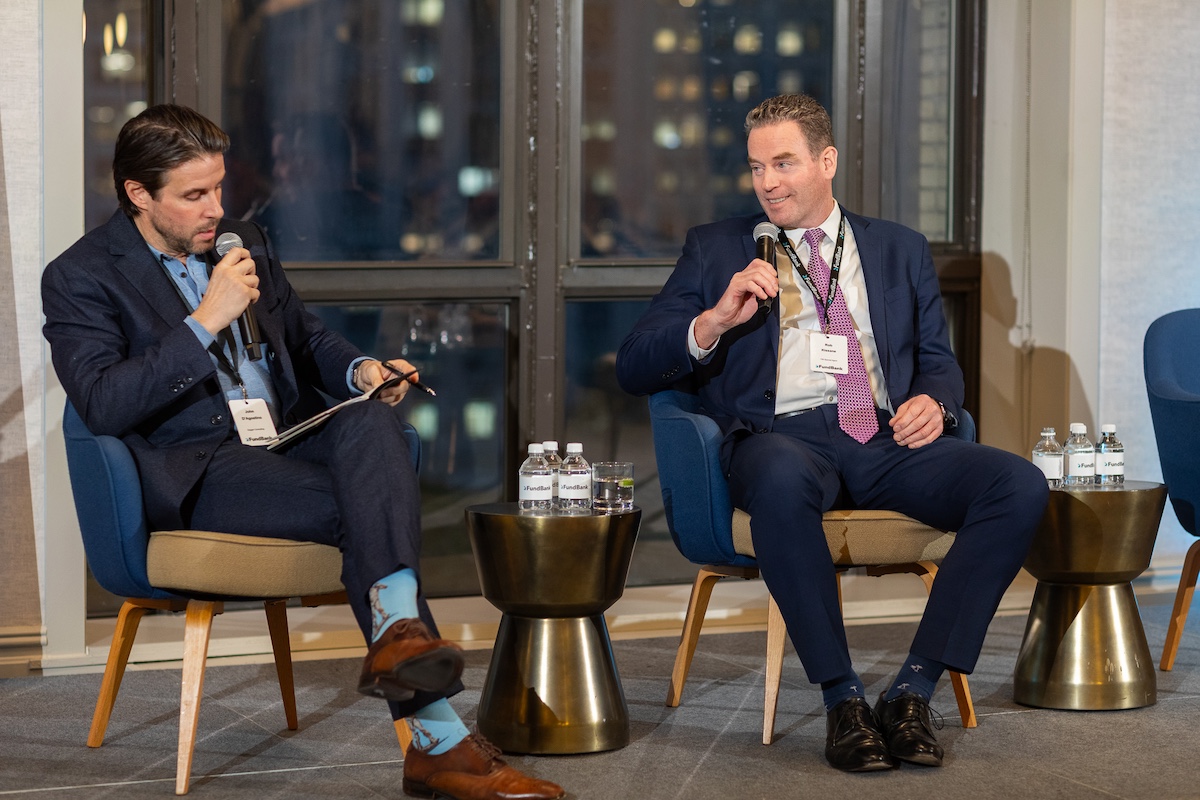
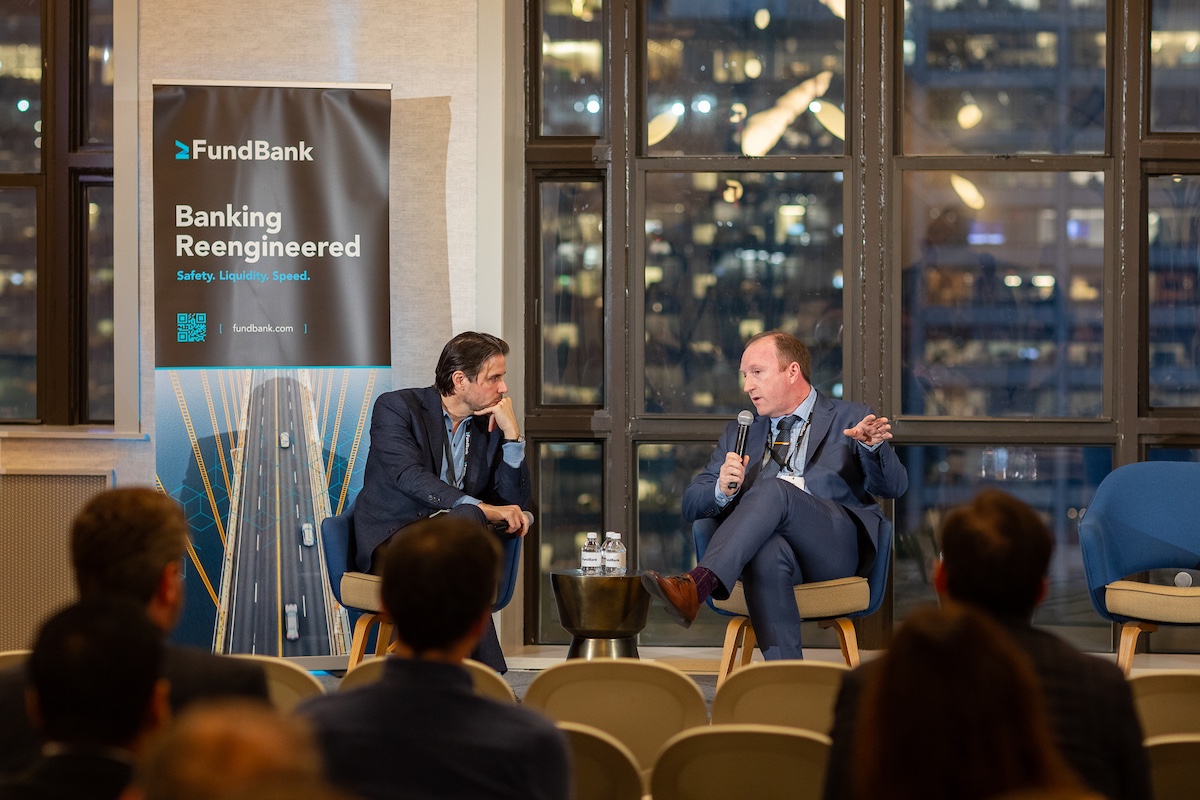
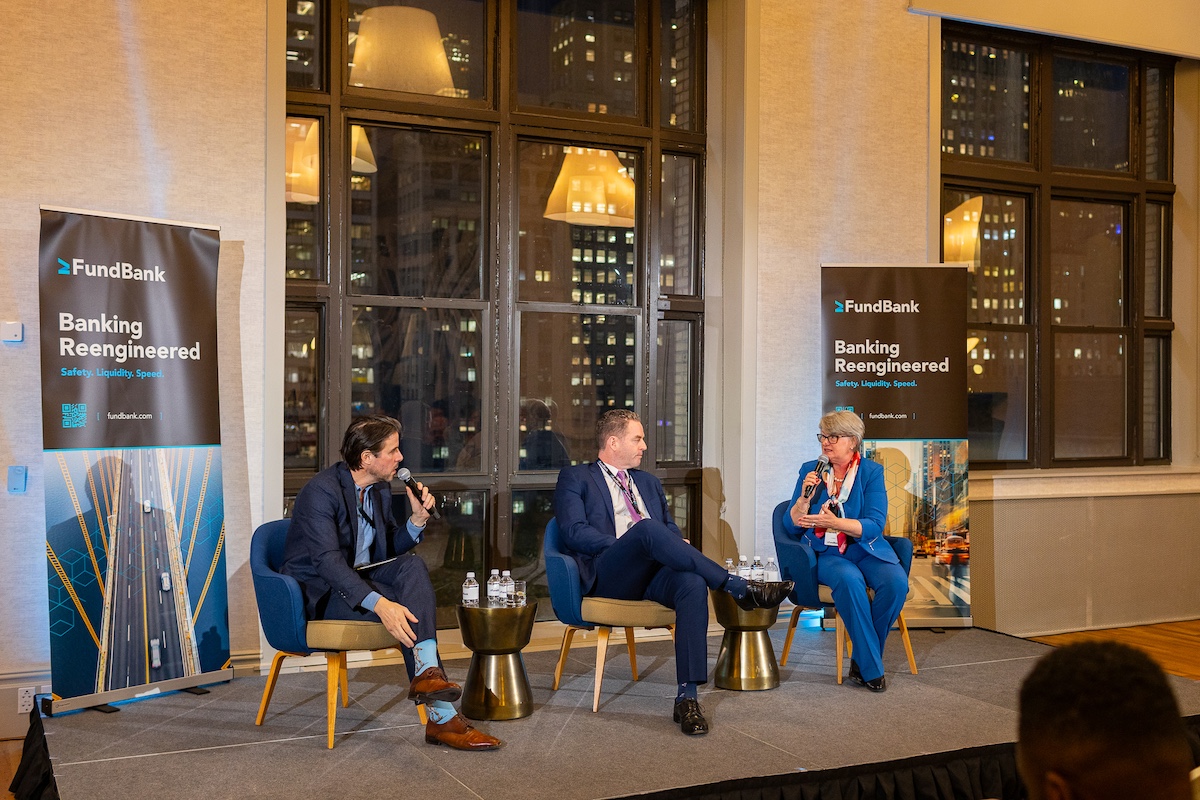
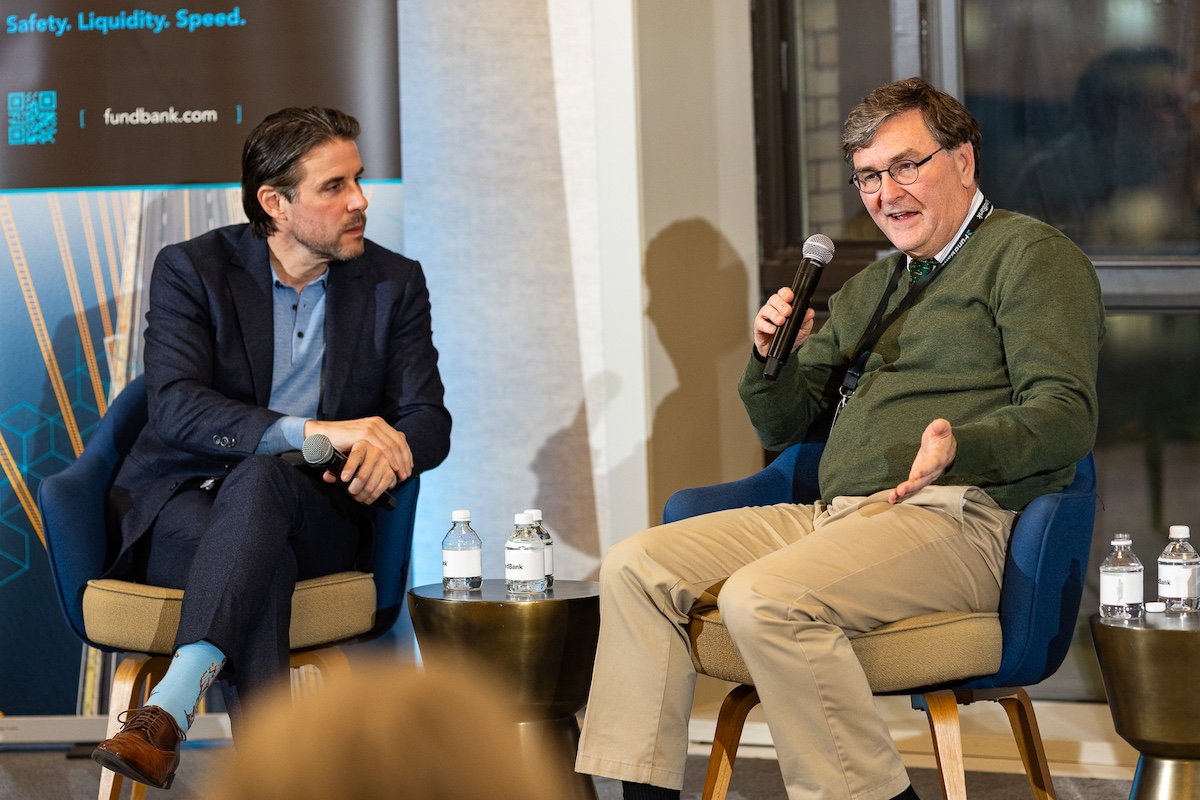
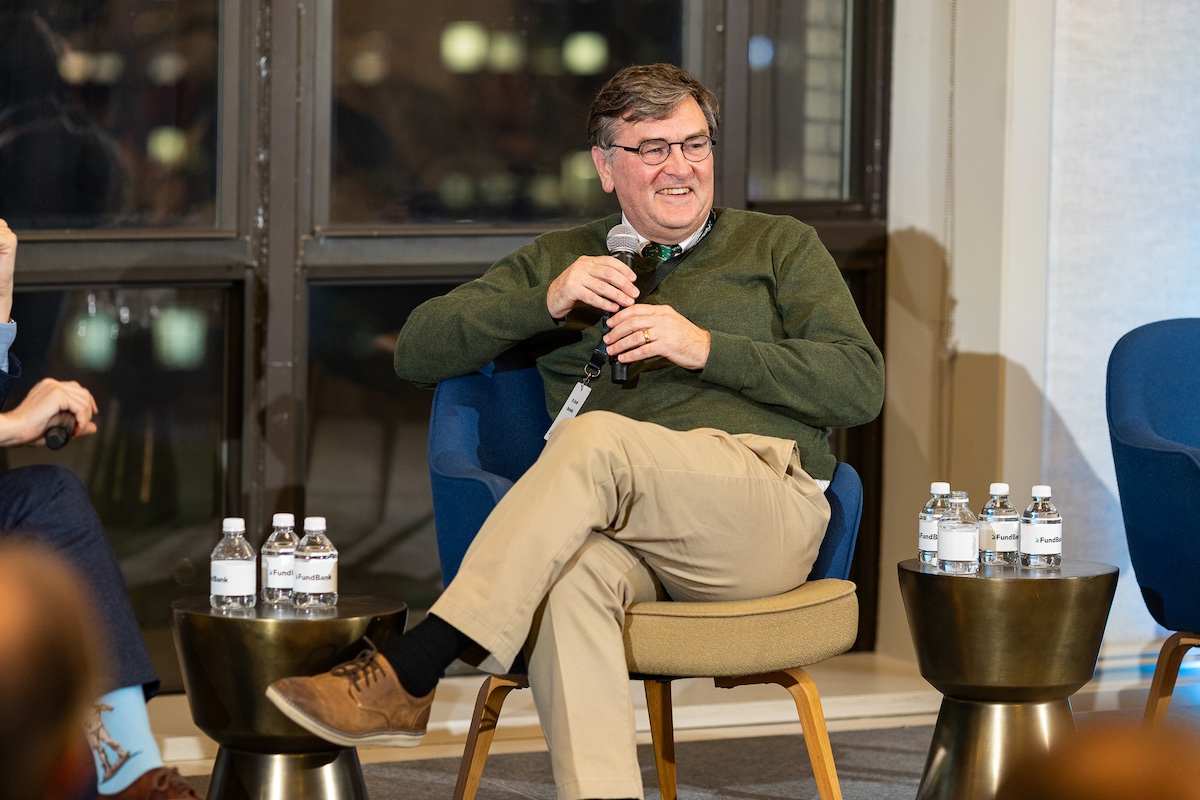
A fireside chat between John D’Agostino (MC) and Colm O’Driscoll (FundBank President)
A fireside chat between John D’Agostino (MC) and Colm O’Driscoll (FundBank President)
Thanks so much for coming. This is the first, right? This is the first, hopefully, annual FundBank Global New York Spotlight event. Excellent.
Well, thank you so much for being here for the inaugural Spotlight event. My name is John D’Agostino. Remember that line from, what was that line from that movie where they say, I tried to get out, but they keep bringing me back in.
Where’s that from? Godfather 3. Yes, that Godfather 3. Thank you very much. So imagine that that was enjoyable for the individual. That’s kind of the position I’m in.
I’ve been lucky enough to work with Colm and Derek and Fred and where’s the King of Cayman? Where’s Don Seymour, the man behind the curtain? For I think close to 20 years we’re going on. And it is so much fun to be back as a board member for FundBank. And I am just absolutely thrilled.
It’s the highest quality group of people. And so we’re going to turn this thing every year into something bigger and bigger and bigger as the bank gets bigger and bigger. So Colm O’Driscoll, the president.
Yes. President of FundBank, right? So we’re going to spend, now I’ve been told we’re going to move today along quickly. So we’re going to have short interviews and then I’d love to get some Q&A and some discussion if people are brave enough.
That’d be excellent. So we’re going to have Colm talk about brief history of the bank, like how this all started. Because I remember you sitting next to me in like a cubicle like nine years, like seven years ago when this all kind of started.
And now we have licences all around the world and it’s an extraordinary thing. I think it’s good to just frame for the rest of the discussion kind of where we are as a company. So let’s just start with the beginning, right? So it’s a brief history of the firm.
So where we, excuse me, where we originated from was a conversation between Don Seymour and I about 10 years ago. That was the gestation for the entirety of this. In terms of where we are now, we can legitimately say that we are a global financial institution that is specific and bespoke for the asset management industry.
So our bank in the Cayman Islands is a fully regulated bank, has been active for 50 plus years and offers banking services, custody services, escrow, trading and the like for a book of clients that is the various fund entities, hedge, private equity, VC, investment management companies, family offices and the like. We started an expansion two years ago. So here in America, we have a national trust bank licence under the auspices of the OCC that’s headquartered in Austin, Texas.
Our CEO, Gillian Ronshake, will be speaking a little later. And that is operational as of about six months ago. When did you start that? When did you start that process? So we started that process about two years ago.
So it was an initial conversation with the OCC and the Federal Reserve just to bounce the idea off, expecting to be chastised and laughed out of the room, but they were actually quite receptive and we started the process about a year and a half ago. So there’s a general consensus that the prior administration, both SEC and banking regulators, were materially more challenging to work with. Do you see that shift as well on the banking side? We see it on the cryptocurrency side for sure.
To a degree. I don’t think that it’s the regulatory environment, looking at it from even a global perspective, I don’t think it’s particularly onerous. I think the issue is coming that there’s a shifting dynamic in that regulators are trying to update the regulation to bring into scope financial innovation that we’ve seen over the last 10 years.
Then from a political perspective, you’re seeing a land grab for the digital asset industry. I actually think that the circumstances are there that we can potentially see a rationalisation of regulation over the coming years, for the first time in a generation. Across countries? Across countries, yeah.
I think the government debt lows that we’re seeing in the Western world, the governments are going to try and source growth, and I think deregulation is a very strong lever for that. I also think from a geopolitical perspective, post-Cold War we had this system of allies that was underpinned by the unipolarity of US hegemony, whereas now we’re moving into a very fractured multipolar system, and I think there’s much less of an impetus to try and adhere to global standards under that. So I think there’s potential that we will see a drawback in the coming years.
So speaking of global standards, you chose to go into Luxembourg? That’s right, yes. We chose… Well, we wanted to be where fund entities and asset managers are, so that’s why we were in the Cayman Islands, that’s why we came into the US, and Luxembourg is one of the biggest fund industries in the world. It’s an enormous ecosystem, and it also has the highest standard of regulation for banks within the EU, particularly for what we do, and we always search for the highest level of regulation.
So we have a credit institution licence, which is under the auspices of the CSSF, but ultimately it’s a licence issued by the European Central Bank that was issued at the tail end of 2024, and that bank went live two months ago, so that is now a live and functioning bank as well. And the US? In the US, we received our licence in November of 2024, and we went live to market six months ago. And we will be establishing a branch in Ireland to replicate what we’ll be doing in Luxembourg in the first quarter of 26.
Now, you’ve been active in asset classes like crypto, which there was, I think it’s now on Senate record, there was a debanking effort, there was pressure put on banks to not work with cryptocurrency firms. I saw this through my relationships, it was extremely difficult for crypto funds, crypto service providers to get to…was getting in early an advantage, and did you feel pressure at the time to not service those types of companies? We never experienced any pressure. We always took the perspective that this is an entirely legitimate asset class, and we would apply the same risk metrics that we do for every asset class.
That was our approach from the outset. So long as it passed the risk parameters that we established as normal, that we would proceed. What we have done up to now is purely the fiat real accounts for the crypto fund entities themselves.
We do have intent across 2026 to be able to offer cryptocurrency custody and trading as well. And we have some ambitions that extend beyond that as well. Potentially a bespoke stable coin that is specific to the asset management industry.
Do you think…is there going to be a persistent strategy of targeting industries and asset classes that are maybe more niche or nuanced versus competing for kind of bulge bracket clients that everybody wants, or do you see yourself competing with massive equity long short funds as well? We don’t discriminate. We don’t have any compulsion to target any specific space. We do naturally fall into some specific buckets.
So in Europe, for example, the large retail USITs, they tend to automatically veer into the very large global financial institutions. However, mid-sized managers that are running rave type entities or ICAVs in Ireland, they would tend to automatically veer into institutions such as ourselves. So it’s not by intent or design, but it just tends to happen naturally.
So Cayman, Lux, US, any other growth plans? Where else do you think you need to be in the world? So we’re in the process of establishing a rep office in the UK, and that’s being run by Cyril Delamere, who’s actually in the audience as well. We are across 2026. We will not be expanding beyond that, beyond the Irish branch, because we’ve a number of additional products that we want to launch into, and there’s some things in the technology space that we want to veer into as well.
The logical next space for us would be the Middle East, potentially into Abu Dhabi or Dubai. So that’s potentially for 2027. It kind of feels like that’s the minimum viable footprint, right? Because if you have an offshore territory, if you’ve got the US, you have the EU, and then you have an entity either in, let’s say, Singapore, Hong Kong, or Abu Dhabi, you can now paper pretty … I don’t think there’s a single global entity that can’t paper to one of those places, right? You can keep expanding forever, but that seems to be the minimum viable footprint.
Yeah. So from a regulatory perspective, we think we would have all bases covered with that global presence. Any expansion that we would see beyond that would be with respect to rep offices, potentially in Brazil, in Singapore, in Hong Kong, places like that.
Okay. Okay. So 2026.
What’s your top goal for Q1 2026? Top goal for 2026 is that, now that we have the banks launched, is to get them securely to markets. I mean, there’s specific products we want to launch, but we can’t ignore the fundamentals. The banking failures of 2023, I mean, they show that in spite of all the financial and technological innovation that we’re currently living through, that the fundamentals of banking are still security.
That’s been paramount since the Medici’s established their bank in Florence in 1400s to spark the Italian Renaissance. I’m always blaming the Italians, Colm. I did say to spark the Italian Renaissance, so some good to come out of it.
So that will be our focus still for 2026. It’s a good way to end the conversation, because I know you’re very tired.
But there has been, I looked it up today, there’s been about 560 U.S. bank failures since the financial crisis. Not all of them have been small. Some of them have been mid-sized, mid-sized banks.
So do you think we’ll continue to see banks consolidate? Do you think, we still have about 2,700, 3,000 banks in the U.S., do you think we’ll have more or less in 10 years? I think we will probably have more, because I think there is going to be some instability coming into the system with some of the financial innovation. In spite of all the benefits that come from stable coins and digital assets, and that being subsumed or incorporated into the traditional finance industry, that is going to cause some tribulation. And I do think there is going to be a degree of regulatory pullback as well.
But that is why we are fully committed to our trust bank model. And that is, we are completely unwavering in that our client assets don’t sit on our balance sheet. They sit on the balance sheet of either central banks or corresponding relationships such as J.P. Morgan, Bank New York Mellon, or in AAA-rated government money market funds.
That’s how we disapply duration risk and credit risk and liquidity risk for our clients. In our industry, it’s a very compelling narrative to be conveyed. I think that’s probably lost on lots of people and lots of firms as they think about the risk associated with dealing with a smaller mid-sized bank, is the duration risk is actually ironically materially diminished because of that correspondence.
Just walk us through that one more time. So you can distil it down or synthesise it down to one line. If 100% of our clients need 100% of their cash by T plus one, then we can always facilitate.
That’s the foundational operating model of a firm bank. So just to keep it on for a bit more, so if I’m just playing devil’s advocate, the perception is that banks make money predominantly through that re-hypothecation and leverage, right? It’s fundamental to the model, the business model of the bank. So I’m being a sceptic and saying, okay, Colin, that’s great, you’re telling me you’re one-to-one backed, that’s wonderful.
How can you be one-to-one backed and still be a profitable banking entity? What’s your answer to that? So the answer is, it’s quite simple, is that we don’t see ourselves, our end point is being ultimately a bank. We see it as a platform for the broader asset management industry. We think of it in terms of nodes, both in terms of product and in terms of client profile.
The product nodes being all the facilities that are acquired by our client base and the client profile nodes being, historically we’ve done the fund accounts, the manager accounts, the family office. But we see an ultimate evolution as well into the LP accounts, the underlying portfolio companies and the like as well. So would you define yourself as a narrow bank? No, not in the traditional definition of it.
But you’re one-to-one backed? Yeah, correct. Right. All right.
Excellent. Well, Colin, thank you so much for joining us today. Now we’re going to, thank you very much, Colin.